

Motorcycle Audio Off-Season: Why Winter Is the Smartest Time to Upgrade Your Bike’s Sound
When riding season is in full swing, giving up your bike for an audio upgrade can be hard to justify. Winter changes that. If your motorcycle is already in storage, the colder months give you time to plan an installation carefully, work through fitment details, and have the system ready before your first spring ride.
Motorcycle audio also has different demands from car audio. A bike’s speakers and wiring may face moisture, vibration, limited space, and wind and engine noise. All without the enclosed cabin that helps a car’s sound system. Choosing equipment and installation methods suited to your motorcycle matters as much as choosing the speakers themselves.
Why winter is a smart time to upgrade
An audio installation can involve more than swapping speakers. Depending on the bike and the upgrade, the work may include removing fairings or other panels, checking available mounting space, routing wiring, choosing an amplifier location, and testing the finished system.
Doing that work during the off-season means you don’t have to rush to get back on the road. There is time to discuss what you want from the system, check whether the equipment fits your specific motorcycle, and address small installation or tuning adjustments before your first longer ride.
It can also make planning easier. Instead of deciding on equipment and installation when warm weather has already arrived, you can get the details sorted while the bike is parked. Wright ReStyling offers motorcycle audio installation in Calgary and can help riders consider options for their bike and listening goals.
Motorcycle audio is different from car audio
A car’s audio components are generally housed inside a cabin. Motorcycle components have a different environment to contend with, including vibration and potential exposure to rain, road spray, washing, dust, and changing temperatures. Fairings and saddlebags can offer some protection, but they shouldn’t be treated as completely sealed spaces.
Weather exposure calls for suitable equipment
For components in exposed or damp areas, look for speakers and other equipment designed for powersports or marine use. Check the manufacturer’s specifications for water and corrosion resistance, and consider the installation location as well as the product label. “Weather-resistant” doesn’t mean that a component can be submerged or left unprotected in every condition.
Ordinary car speakers may be a poor choice in a motorcycle fairing if they aren’t intended for moisture exposure. Water and condensation can contribute to corrosion at terminals and other metal parts, while vibration and repeated wet-dry cycles add to the strain. Protected connections, suitable hardware, and careful sealing where wiring passes through panels can help reduce the risk of problems.
The right approach depends on the bike and where the equipment will sit. A speaker mounted behind a fairing panel may face different exposure than one fitted in a more exposed location.
Fairing and saddlebag space is limited
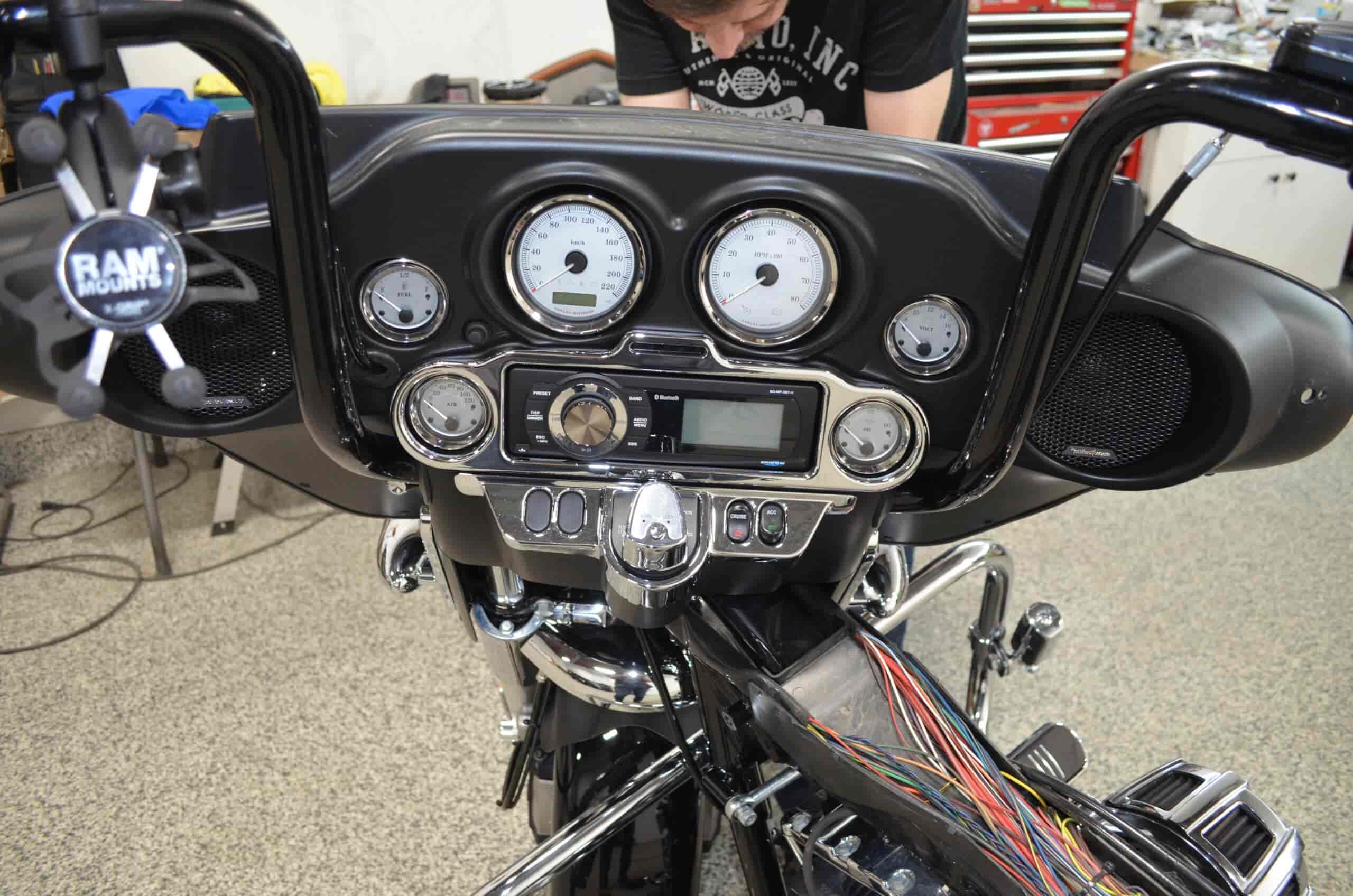
Motorcycles don’t have the same installation space as cars. A fairing may already contain factory audio components, gauges, controls, and wiring. A speaker or amplifier that looks compact on its own still needs to fit without interfering with those parts or making panels difficult to reinstall.
Saddlebags can offer another possible location, but using them for audio components may reduce storage space. Fitment also needs to account for how the bags open, how equipment is secured, and whether it can be protected from moisture.
Before choosing parts, confirm the available mounting depth and clearance. The MTX guide to adding speakers to a motorcycle audio system is one resource that discusses fitment considerations, including shallow-mount speaker options.
Amplifier placement involves trade-offs
An amplifier needs a secure mounting point and room to manage heat. A fairing can offer some shelter, but space may be tight. A saddlebag may offer a convenient location, but the installer still needs to consider airflow, moisture, wiring routes, and access for future service.
Wherever it goes, the amplifier should be mounted to handle motorcycle vibration, with wiring protected and routed clear of moving parts and heat sources. It’s also important to consider the bike’s electrical system and the power needs of the equipment. A system should be planned as a whole rather than assembled around a speaker or amplifier in isolation.
Set realistic expectations for sound on the road
A motorcycle doesn’t provide the quiet, enclosed listening space of a car. Wind, engine noise, road surfaces, and helmet noise all affect what you hear. A system that sounds full and clear while the bike is parked may seem different once you’re moving.
A practical goal is clear, enjoyable sound at your usual cruising pace, not the same bass response or isolation you might expect inside a car. Speaker placement, appropriate amplification, and sensible tuning can all help the system perform better, but no speaker upgrade can remove wind or road noise.
It’s also worth resisting the urge to solve every listening issue by turning the volume up. Excessive volume can cause distortion and interfere with hearing the sounds around you. Safe riding and awareness should come first; make any adjustments only when parked.
Why professional installation matters
A motorcycle audio upgrade has to fit the bike physically and electrically. A professional installer can assess the available space, choose equipment suited to the installation location, and plan how to secure and protect the wiring. They can also check that the work doesn’t obstruct controls or interfere with fairing panels, saddlebags, or other components.
Installation quality can make a difference to reliability as well as sound. Loose mounts may rattle, exposed connections may be vulnerable to moisture, and poorly routed wires can become damaged. A careful installation includes checking connections, securing components, reassembling panels properly, and confirming that the system works as intended.
At Wright ReStyling, motorcycle audio is part of the wider audio and entertainment systems service. The team can discuss equipment and installation options around your motorcycle rather than assuming that a car audio setup will translate directly to a bike.
Use the off-season to plan the right upgrade
Before scheduling, think about how you ride and what you’d like to improve. Are you looking for clearer music at typical cruising speeds, a more capable system for longer rides, or an update to an existing setup? Your bike’s make, model, year, current audio components, and storage configuration can all affect the available options.
A short list of priorities helps make the conversation more productive:
- What you’d like to hear more clearly
- How and where you usually ride
- Whether you want to preserve your current fairing or storage setup
- Any problems with the existing speakers, wiring, or controls
These details help narrow down practical choices and avoid buying equipment before confirming that it suits the motorcycle.
Get your bike’s audio ready for spring
Winter is a useful window to plan motorcycle audio because it gives you time to make thoughtful choices while your bike is off the road. Weather-suitable components, careful fitment, secure wiring, and realistic listening goals all contribute to an upgrade that’s better matched to riding conditions.
Wright ReStyling is a family-run Calgary business with experience serving vehicle owners since 1999, including motorcycle audio work. If you’re considering an upgrade for the next riding season, contact Wright ReStyling to discuss options for your bike in Calgary and Southern Alberta.